Golden Era Bodybuilding: A Fan's Guide to the 1970s Iron Age
Ask ten bodybuilding fans to name the sport's greatest decade and most of them will give you the same answer before you finish the question: the 1970s. The golden era of bodybuilding is not just a period in the sport's history — it is a living culture with its own gyms, its own silhouette, its own poses and its own artwork. This guide walks through what the golden era actually was, why its physiques still set the standard for so many fans, and how the fandom around it keeps growing half a century later.
What was the golden era of bodybuilding?
The golden era is the name fans give to the period roughly spanning the mid-1960s to the early 1980s, when bodybuilding grew from a sideshow curiosity into a genuine culture — but stayed small enough that its whole world fit into a handful of California gyms. The centre of that world was Venice Beach and the gyms around it, where the best physiques on earth trained side by side, often outdoors, in the sun, for hours a day.
Three things made the era golden rather than merely old. First, the physiques: the champions of the day were big, but they were prized for shape — broad shoulders, sweeping lats, genuinely small waists and legs that matched the upper body. Second, the culture: training was communal and theatrical, with posing practice treated as an art form and gym rivalries playing out in front of whoever wandered in. Third, the imagery: the era produced the most imitated photographs, posters and magazine covers in the sport's history, all sun, iron and silhouette. Fans today are not just nostalgic for the bodies. They are nostalgic for the whole picture.
The beach gym world
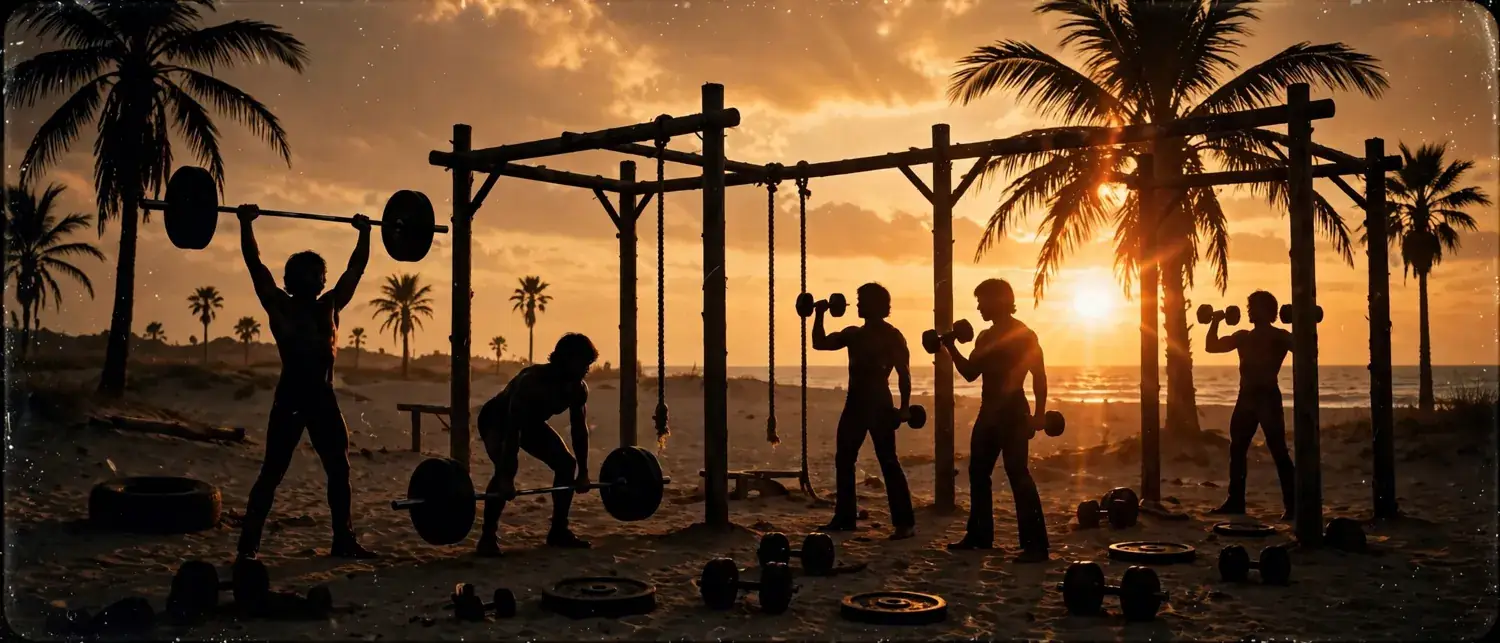
To understand the golden era you have to understand where it happened. The famous rooms of the period were not chrome fitness clubs. They were iron temples: chalk in the air, plates worn smooth, equipment that had been repaired more often than replaced. And beyond them sat the outdoor beach gyms, where training happened in sea air with the Pacific as a backdrop — an image so strong that it still defines what bodybuilding looks like in the public imagination.
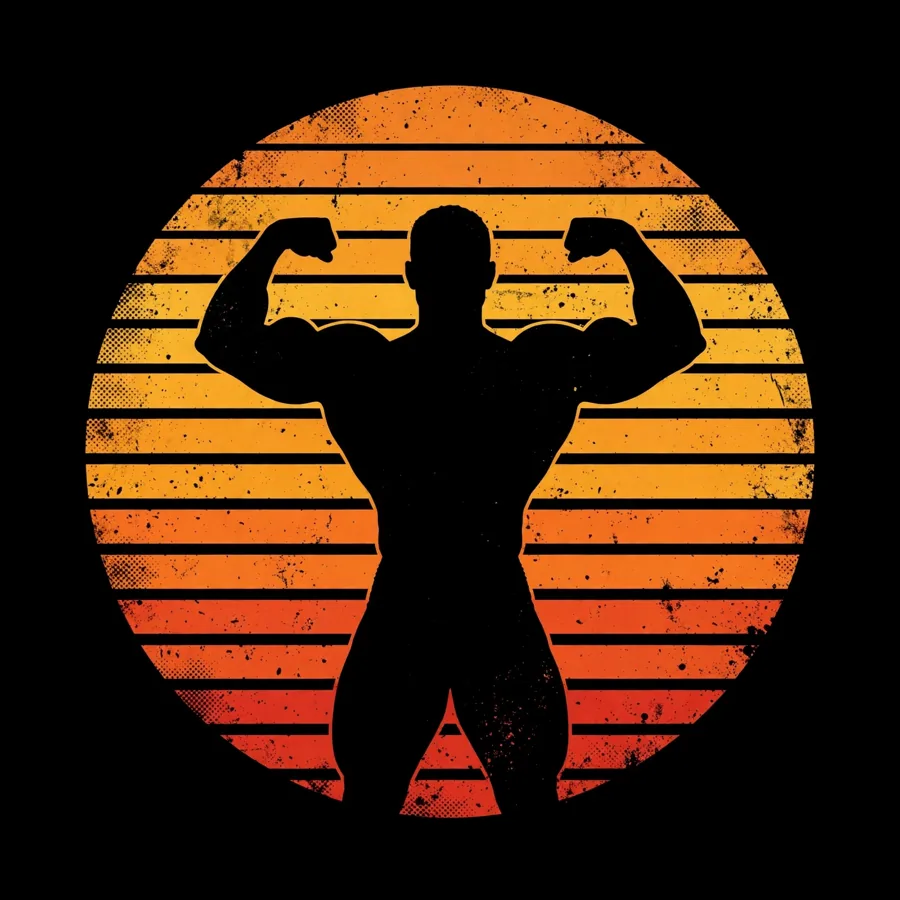
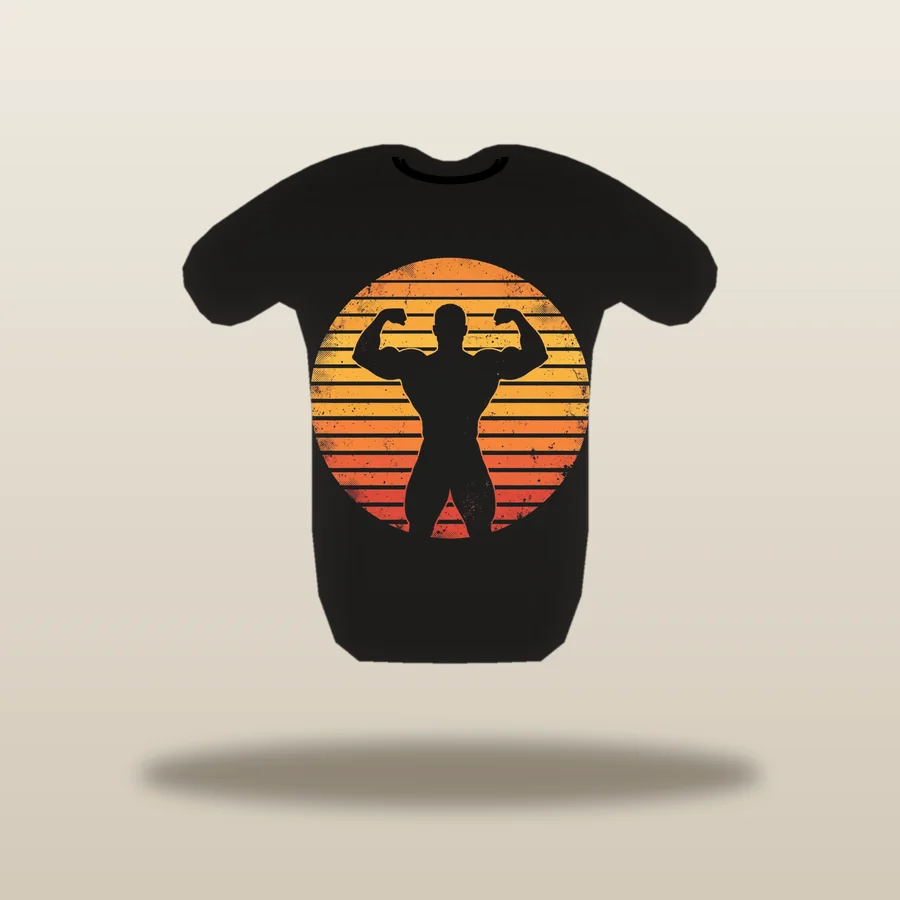
That setting shaped the training. Sessions were long and social. Lifters trained in groups, spotted each other, posed between sets and argued about angles in the mirror. Sunlight was part of the sport: physiques were developed outdoors and judged partly by how they looked in it. When fans today hang a sunset over a double biceps silhouette, this is the world they are quoting — the beach, the iron and the hour before dark when every physique looked like a poster.
Aesthetics over mass: the golden era physique
The single biggest difference between the golden era ideal and later eras is what the sport asked a physique to be. Golden era judging rewarded the complete picture: symmetry between left and right, proportion between upper and lower body, a tight midsection, and the ability to present it all through posing. A competitor could be outweighed and still win if his shape told a better story.
The signature of that ideal is the V-taper — shoulders and lats wide enough to make the waist look narrow by contrast. Everything in golden era training served it: heavy back work for width, relentless attention to the midsection, and posing practice that showed the taper from every angle. It is why the era's fans still use words like flow, lines and sculpture more than size, and why the classic silhouette in fan art is always drawn the same way: wide on top, narrow in the middle, balanced below.
The poses: vacuum, double biceps and the art of presentation
Posing in the golden era was not an afterthought; it was half the sport. Routines were choreographed, practised daily and performed with a showman's sense of timing. Three elements defined the era's posing. The front double biceps, arms curled against a flared lat spread, became the default image of bodybuilding itself — the pose on the posters, the pose in the artwork, the pose kids copy in mirrors. The side chest showed thickness and arm development in a single dramatic line. And then there was the vacuum.
The stomach vacuum is the golden era's lost masterpiece: the athlete exhales completely and draws the abdomen in and up beneath the ribcage, producing a waist so hollow it looks impossible. It demanded a genuinely small waist and serious practice, which is why it faded as physiques grew heavier — and why today's fans treat it as the era's purest symbol. Societies of vacuum devotees may be a joke in form, but the admiration underneath is entirely serious.
How golden era lifters trained
Golden era training was high-volume, instinctive and social. Sessions often ran two hours or more, built on the basics: squats, presses, rows, deadlifts, curls and endless variations performed for set after set. Training partners mattered enormously — for spotting, for pacing, and for the friendly warfare of trying to out-work the man next to you. Chalk and iron were the whole technology stack.
Two features stand out to modern eyes. The first is posing between sets: mirrors were training tools, and flexing the muscle you were working was considered part of the work itself. The second is time outdoors. Sun, sand and fresh air were woven into the daily routine in a way no modern indoor facility reproduces. When today's lifters romanticise the era, long sessions and training partners in the sun are usually what they picture — not any secret programme.
The culture: magazines, posters and the iron temple
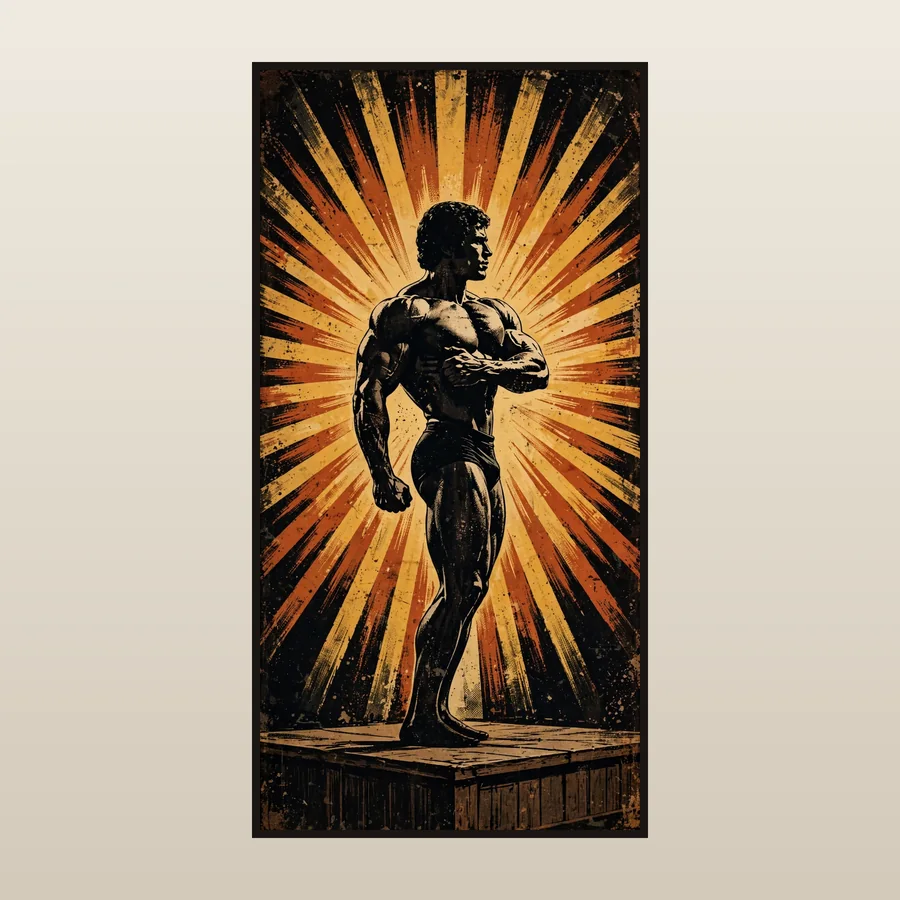
Before the internet, bodybuilding culture travelled on paper. Monthly magazines carried training articles, contest reports and photography that fans studied like scripture, and posters from those magazines covered bedroom and gym walls across the world. The poster aesthetic — sunbursts, bold type, a posed figure against graphic rays — became the visual language of the sport, and it is the language fan designers still speak today.
The gym itself was a cultural institution. The great rooms had hierarchies, regulars, unwritten rules and a sense that you were training inside history. Fans call those places iron temples, and the phrase captures something real: for the people in them, training was closer to a practice or a craft than to exercise. That reverence is a large part of what modern fans feel they are buying into when they choose golden era imagery over generic gym graphics.
Why the fandom keeps growing
Half a century on, the golden era is not shrinking into history — it is expanding. Classic physique competition divisions built explicitly on the era's ideals now headline shows. Vintage-style gyms with iron plates and chalk are opening in cities that never had them. Social media accounts dedicated to the era's photography gather followings in the millions, and a generation of lifters who were born decades after the era ended describe its physiques as their goal.
The reasons are not mysterious. The golden era ideal is attainable-looking in a way later mass eras are not: fans can imagine building a version of that shape. It photographs beautifully. And it carries a story — beaches, temples, posters, brotherhood — that pure size never tells. Fandoms grow around stories, and few corners of fitness have a better one.
Golden era eating: protein, patience and diner food
No account of the era is complete without its food. Golden era nutrition was built on a simple belief: train hard, eat plenty of protein, and let time do the rest. The plates of the period were diner plates — eggs, steak, cottage cheese, tuna, milk — eaten in serious quantities by men who trained for hours and thought about little else. Supplements existed but were a side note; the main event was food, work and sleep, repeated for years.
Fans find this refreshing now. In an age of twelve-ingredient pre-workouts and macro spreadsheets, the golden era approach reads like a manifesto for simplicity. It also explains the physiques: built slowly on ordinary food and extraordinary consistency, they carried a density that fans still describe as "earned". When modern lifters say they want to train and eat like the golden era, this is the table they mean — unglamorous, protein-heavy and patient.
The documentary effect: how film froze the era in amber
Every fandom has a founding text, and the golden era's was film. The documentary and magazine photography of the mid-1970s did something no contest report could: it showed the world what the beach gyms actually felt like — the sun, the rivalry, the humour, the strange poetry of men sculpting themselves in public. Generations of fans have quite literally seen the era through those frames, and the frames are so strong that the era's visual identity has never needed updating.
This is why golden era imagery is so recognisable even to people who know nothing about bodybuilding. The sunset silhouette, the posed figure against rays of light, the chalk-white hands on a black bar — these are film stills translated into a design language. When you see them on a poster or a shirt today, you are seeing a fifty-year-old camera angle still at work.
A short golden era glossary for new fans
New fans pick up the vocabulary quickly, but a few terms unlock most conversations. The pump: the temporary swelling of a trained muscle, chased and celebrated in every era session. Posing practice: the daily rehearsal of mandatory poses and routines, treated as training in its own right. The iron temple: any serious, old-school gym, half affectionately and half in genuine reverence. Pump cover: the oversized layer worn to warm up, removed at the dramatic moment. And the vacuum: the pose that needs no explanation once you have seen it — the era's signature, still undefeated. Add two more and you can follow any fan argument: lines, meaning the flow of a physique from muscle to muscle rather than its size; and condition, the lean, detailed state a competitor brings to the stage. With those seven words — pump, posing, temple, cover, vacuum, lines, condition — you speak golden era fluently enough to argue about it, which is most of the fun.
How fans wear the era today
Modern golden era fandom expresses itself the way all fandoms do: through the things people wear and the rooms they build. Sunset silhouettes, iron temple lettering and posing-room slogans have become a design language of their own, printed on tees, hoodies, posters and gym flags. Done well — with original artwork rather than copied photographs or logos — it lets a fan carry the era into a modern gym without wearing anyone else's name.
That is the spirit this store was built in. Our sunset artwork is an original illustration. Our slogans come from the culture itself — the poses, the rooms, the rituals — not from any athlete's brand. If the golden era is your era too, start with the guide above, argue about it with your training partners, and wear the sunset while you do.
Questions about this guide
When was the golden era of bodybuilding?
Most fans place it from the mid-1960s to the early 1980s, with the 1970s as its heart — the decade of beach gyms in California, aesthetic physiques and the sport's most famous documentary generation.
Why is it called the golden era?
Because of the combination fans still chase: aesthetic, proportioned physiques, a tight-knit gym culture, iconic photography and posters, and a sport small enough that everyone trained in the same few rooms.
What is the most famous golden era pose?
The stomach vacuum and the classic front double biceps are the era's signatures — both prized line and shape over sheer size.
What made golden era physiques different?
The judging and the culture rewarded proportion, symmetry, small waists and posing artistry. Mass mattered, but shape mattered more.
Is golden era bodybuilding still popular?
Yes — classic physique divisions, vintage-style gyms, fan art and retro merch all keep growing, driven by fans who prefer the era's aesthetic ideal.